Vichaara written by: Akhila Chakrala and Sumanth Vankayala
Vichaara edited by: Govardhan Sai Pinni
Source:
- https://economictimes.indiatimes.com/prime/technology-and-startups/cloudtail-sale-to-amazon-this-is-how-much-narayana-murthy-sudha-murty-made/primearticleshow/107828978.cms
- https://the-ken.com/story/amazon-got-rid-of-its-largest-seller-only-to-replace-it-with-other-preferred-sellers/?searchTerm=cloudtail

What stops Amazon from being a seller on its own Marketplace?
- "The definition of a marketplace is that all sellers and buyers are equal, and get the same information and the same terms." If Amazon, being a marketplace, is also a major seller on its own platform, where is the room for fair play and competition?
- Indian FDI regulations restrict Amazon and other e-commerce marketplaces from holding equity in their platform’s sellers and from exercising ownership or control over the inventory being sold. Another restriction that a marketplace must abide by is to limit any individual seller’s share in total sales on the marketplace to 25%.
While these regulations intend to protect competition, what it comes down to is that Amazon constantly needs to build and rebuild relationships with the major players in Indian commerce to earn a gate pass into the selling side of the marketplace ecosystem.
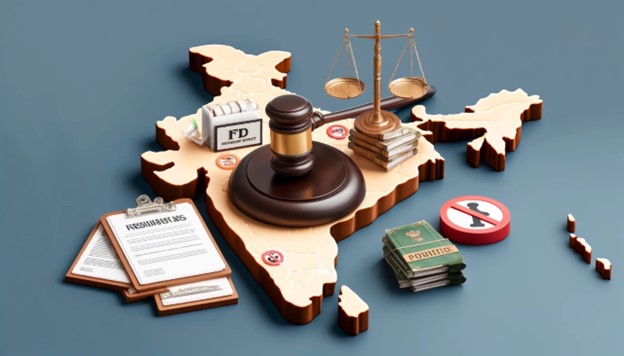
Amazon’s Quest to find the Katappa(s) and Bahubali(s) of Indian Commerce
Until recently, two sellers, Cloudtail and Appario, drove up to 35% of sales on Amazon. While it is public knowledge, or at least a strong perception, that Amazon directed the activities of these two entities, it might be known to only a few that Amazon co-owned these seller entities with revered names in the Indian business ecosystem. Appario was a joint venture between Amazon and Zodiac Wealth Management Group, whereas India’s IT giant Infosys’s founder couple, the Murthys, held a majority stake in Cloudtail, with Amazon as the other shareholder.
The first article details the journey that the Murthys took with Amazon and how Cloudtail allegedly facilitated Amazon in navigating around FDI restrictions. This journey ended in early 2022, with the Murthys relinquishing their stake in Cloudtail to Amazon for a consideration that seemingly wasn't on par. However, this association might have earned the Murthys three times their investment in Cloudtail (from August 2014) along with an annual fee on Cloudtail’s revenue. Many factors could have led to the fallout between the Murthys and Amazon, including their respective concerns over public image and regulatory scrutiny.
Taking the story forward, the second article explains how, in the last two years, Cloudtail’s and Appario’s business shifted to multiple other ‘preferred’ sellers on Amazon, each backed by prominent names in the Indian business ecosystem. Interestingly, most of these entities are new to this business, sell exclusively on Amazon under ‘preferred’ terms, and employ former executives of Amazon and Cloudtail, even though Amazon does not hold any stake in these entities. Although Amazon now seems to seriously (or try to) respect the boundaries set by Indian regulators over the ownership of sellers, it is logical to assume that Amazon still exercises significant influence over these sellers. This is because Amazon's tools and insights, given exclusively to these ‘preferred’ sellers, make them the largest performers in the marketplace, apart from their own capital strength.

Whether Amazon is looking for a Katappa (one who can be trusted to execute instructions without question) or a Bahubali (one who can be trusted with all the powers of the game), the answer to that might have changed over time, especially after the fallout with its erstwhile Katappas (ironically).
Agraga’s take:
For a country and market like India, where every business and brand is keen to have its share, trust and time seem to be the stepping stones for success.
Regulators are playing a long-drawn game of hide and seek with e-commerce players, testing their intent, market shifts, and public reaction before they can finally come to ‘trust’ them with the power of, at best, oligopoly—an eventuality that regulators may not be able to avoid.
E-commerce players are exerting all their might to win over the Indian market and regulators while simultaneously placing their ‘trust’ in chosen preferred sellers who may eventually create their own rules of the game. This, too, is an eventuality that e-commerce players may not be able to avoid.
A win-win for both regulators and e-commerce players could be a level playing field between ‘preferred sellers’ of Indian ownership and the marketplace, where no single entity is too powerful to act without the input of others.
As for the Katappas and Bahubalis backing these ‘preferred sellers,’ it might be a game of win-win (mega) with their capital risk mitigated by Amazon-guaranteed business. In a purely capitalist sense, these sellers are ultimately manifesting a level playing field by lending their name (trust), time, and might (capital), thus deserving the returns that might seem opportunistic and unfair in a socialist setting.
For the Indian consumers today, the access and convenience that e-commerce has introduced are irreplaceable. As the customer is king, the ecosystem inevitably undergoes a metamorphosis, often at the expense of traditional retail players. However, the story doesn't end here, as the next significant development from regulators, ONDC, is on the horizon and worth watching.