Vichaara written by: Anjan Babu
Vichaara edited by: Govardhan Pinni
Source: Financial Times - https://www.ft.com/content/5a2b4491-5687-4b11-872d-a4f51121bbb2
Authors of the Original article – Chris Kay and John Reed
India has taken a hard line in its economic relationship with China.
As quoted by FT – “India’s rethink of its relationship with China dates back to 2020 when its economic and security circumstances altered dramatically.”
During the COVID-19 pandemic, India's reliance on China for about 70 percent of its bulk drugs, such as paracetamol, and other ingredients became starkly apparent as shortages from China led to a drop in medicinal supplies.
Around the same time, bilateral relations between India and China deteriorated after troops from both countries clashed along the disputed border in the Himalayan region of Ladakh, resulting in at least 24 fatalities.
In summary, the following are the two policy matters that are having a significant impact on India Inc.
Capital Restriction:
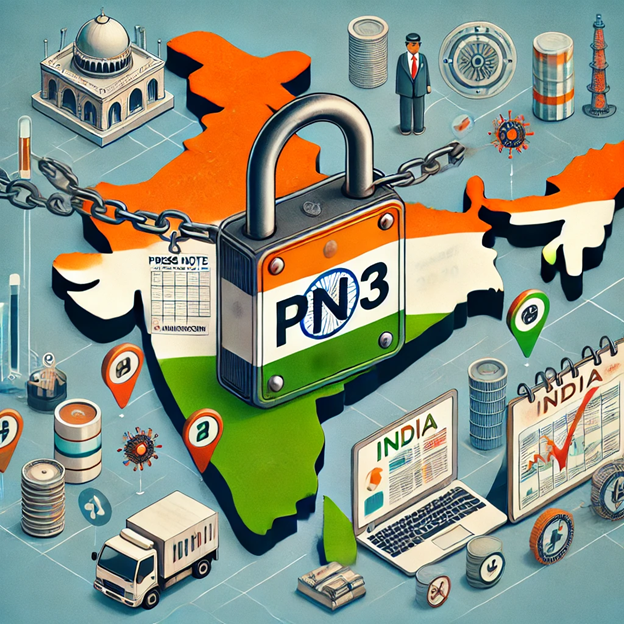
During the pandemic, India introduced Press Note 3 (PN3), which mandates the government approval for all investments by countries sharing a land border with India. This regulation encompasses any entity from such a country, or where the beneficial owner of an investment into India is based or is a citizen of any such country, requiring them to invest only through the Government route.
While PN3 is thorough in its coverage, including aspects like beneficial ownership, its approval process is notably opaque.
The PN3 may have overstayed its welcome and is still active today.
This lack of clarity has led to a few issues such as:
- Ambiguity around “beneficial ownership” discourages prospective investors in India, deterring those who might otherwise contribute positively to the Indian economy.
- Inconsistency in applying PN3. Eg: Shein’s venture with Reliance Retail
For these reasons, substantial and compliant investments from the EU and the US might hesitate to enter the Indian market if they include even minimal contributions from Chinese investors. This is evidenced by a steep decline in FDI inflows from the past 3 years.
Visa Restrictions:
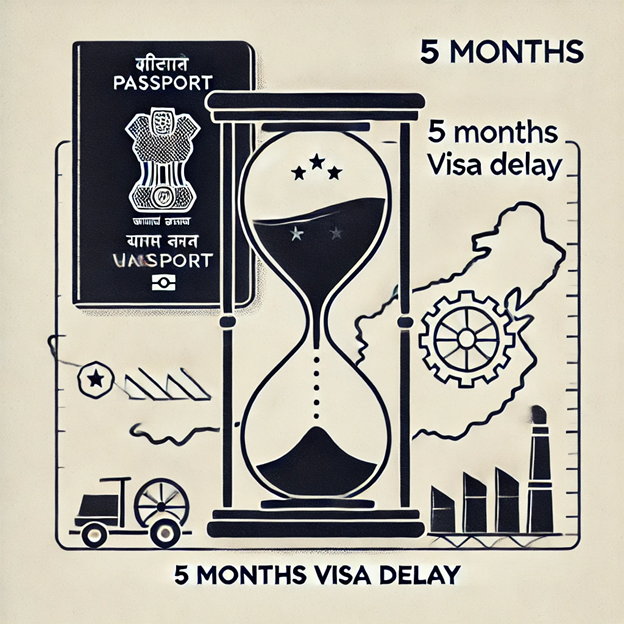
Visa processing for Chinese nationals entering India currently averages around FIVE months. While this policy is intended as a response to Chinese aggression on the border, it inadvertently harms the Indian industry. Indian manufacturers, particularly in sectors such as electric vehicles, mobile phones, and chips, heavily rely on technology imports from China, including the transfer of expertise from Chinese counterparts. In this context, visa restrictions can be self-sabotaging. This issue becomes even more pressing when multinational companies with a Chinese presence establish new units in India and require support from their Chinese employees for implementation.
Agraga’s Take:
India’s diplomatic efforts are crucial in reducing the country’s dependence on China, striving to balance national and economic interests effectively. This strategy includes urging developed economies to invest in India and share their technological advancements. While some industries may navigate this shift more smoothly, it remains a significant challenge for sectors deeply intertwined with China in the global value chain.
Despite the modern reliance on global supply chains, India has a rich history of self-reliance, heavily supported by its strong consumer base and infrastructure development. Echoing the self-sufficiency of ancient times, India is now poised to revive and strengthen its independent economic capabilities.